


Growing up in North Miami, Eve Samples was always aware of the contrast between the urban area in which she lived and the natural beauty that wasn’t too far from it. She has fond memories of grade school trips to the Keys, where she learned about marine biology by studying sea critters she gingerly held in her little hands. And, she remembers crafting an environmental newsletter with a friend of hers after Hurricane Andrew knocked out the power for two weeks in 1992. However, there was no sense at the time that this Point A would ferry Samples to the Point B in which she currently finds herself.
“The seeds were planted,” Samples says of those formative years. “It just took decades for them to blossom.”
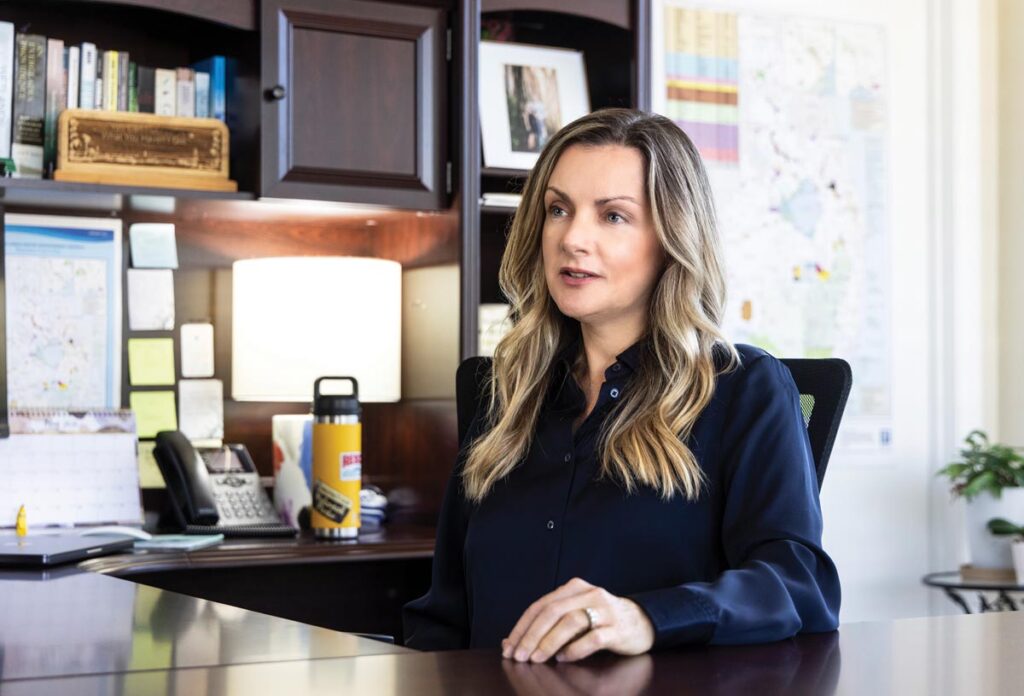
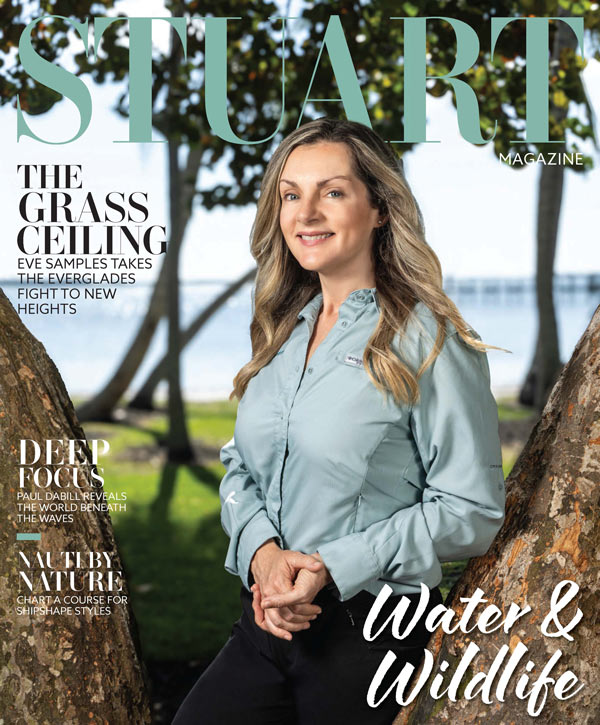
After a 20-year career in newspapers, working as a reporter for outlets such as The Palm Beach Post and then an opinion editor for the USA Today Network-Florida, in 2020 Samples began a second act protecting the land that once captured her imagination as a child. As executive director of Friends of the Everglades, Samples is inspiring others to preserve, protect, and restore the large, one-of-a-kind ecosystem that is so vital to the state.
“Some people think of the Everglades as a distant national park down at the southern end of the peninsula. But really the Greater Everglades span from north of Orlando down to Lake Okeechobee, east to Stuart, west to Fort Myers, down south of the lake, then to the southern end of the peninsula, and even the Florida Keys,” she says. “So, we are sitting in the Greater Everglades right now, and the health of that ecosystem is hugely influential on our future survival.”

After graduating from North Miami Senior High School, Samples pursued a journalism degree at University of North Carolina, Chapel Hill, before plunging headlong into a newspaper career of her own. As a reporter and then an opinion editor, Samples focused her attention on some of the state’s most pressing environmental issues.
“In 2013, the community that I was reporting on in Martin County was absolutely devastated by polluted discharges from Lake Okeechobee into the St. Lucie River and Indian River Lagoon,” she recalls. “It became known as the Lost Summer of 2013, and that term was coined by someone I interviewed, a local Realtor who lived on the water, and had kids who played on the water, but those kids had to stay out of the water all summer, and he said, “This feels like a lost summer.” I wrote about it, and that term stuck. There was economic fallout, there was public health fallout and it was really a problem that had its roots in the status quo that favors polluting industries.”
Then came another terrible summer in 2016, and another in 2018, which Samples says were “arguably worse” because of the toxic blue-green algae that was noxious to smell, and commanded political attention. As an opinion editor, Samples moderated lawmaker forums where candidates and elected officials talked about what they would do to address the crisis.
Ultimately, Samples began ruminating about a career change. She was being pragmatic, she says. In her youth, she had seen how shuttered newspapers had impacted her family. With the dramatic decline of local news coverage in recent years, Samples was being realistic about what the future might hold for her, too. Whatever her next chapter looked like, Samples knew it had to entail meaningful work of some sort.
Enter the 2019 Stuart Christmas Parade, which offered Samples a tantalizing (albeit unconventional) vision of her next act. There, on a float created by the Friends of the Everglades, was a figure of the organization’s founder, Marjory Stoneman Douglas, crafted from trash that had been collected from the beach.
“It’s a funny little story,” Samples notes, as she continues to tell the tale. “I’m not sure if it’s newsworthy, but it’s a very Stuart story.”
After the parade, Samples stopped at a neighbor’s house and learned that Friends was looking for a new executive director.
“I went home that night and started researching Friends of the Everglades and Marjory Stoneman Douglas. I’m not exaggerating: I fell in love with Douglas that night,” Samples recalls. “I knew just a little bit about her from growing up. She was a person who, if someone wasn’t doing something that needed to be done, she stepped up
and did it.”

Outside of Stoneman’s work as a pioneering journalist in the early 20th century, she was a feisty environmental crusader who, among other things, wrote the acclaimed book The Everglades: River of Grass. The tome is widely hailed as an inspiration to both politicians and everyday people to protect it with the famous line “There are no other Everglades in the world.”
When Samples reflected on the depth of Stoneman’s career, she was deeply moved and decided to follow in her footsteps.
Today, Douglas’s legacy guides the work Samples does, as she pushes to protect the Everglades at a time when increased development and new residents are among the things placing a strain on its health.
The organization’s North Star is the “Rescue the River of Grass” campaign, which urges policymakers to buy at least 100,000 acres of land in the Everglades Agriculture Area. The land would restore clean water flow to the southern Everglades and Florida Bay and in turn protect South Florida’s drinking water. Such a purchase would protect the state’s economy, environment, and public health.
“The state actually has the funds to do it, so it is a matter of creating that political will to get the job done,” she says. “Back in 2016 and 2018, when Stuart had toxic algae in the river, people spelled out “Buy the Land” on the beach that year, because it was so obvious we needed to, but it was never done. What happened instead is that a big reservoir is being built on a shrunken-down footprint, and we’re going to need the land to make sure the water is clean. It can’t be sent south to the Everglades unless it’s clean. So that’s a huge priority for us.”

When Douglas originally founded Friends of the Everglades in 1969, it was to fight the construction of a major airport that was to be built near Everglades National Park. Though the project was ultimately unfinished due to protests, Samples was drawn back to that same plot of land last year when she learned that the Trump Administration—with Governor Ron DeSantis’s blessing—would be building an immigrant detention center nicknamed Alligator Alcatraz on that same spot. Armed with scientific data, Samples fought the government in court and alongside various environmental experts and interested parties who attested to the damage this facility would do to the ecosystem. After months of litigation, in May, it was announced that the facility would be closing.
“To be honest, this work feels similar to what I was doing as an opinion journalist,” she says. “I’m researching and communicating to hold government leaders accountable. Now, we can activate tens of thousands of our supporters of the Everglades that follow our work, believe in our work, believe in our mission to help apply pressure to them too.”
During Samples’s brief tenure at Friends of the Everglades, her staff has grown from two to ten, and her budget has blossomed from $500,000 to $3 million.
“The support we’ve received, and the growth we’ve had as an organization, tells me that there are a lot of people hungry for the work we’re doing, and who believe in what we’re doing as much as we do.”

Samples seems to relish that no two days are the same in her job. Outside of Monday morning staff meetings, there are film screenings and briefings with local water management officials about phosphorus levels in the water. There are discussions about how to rehabilitate Douglas’s historic home in Coconut Grove, and quiet moments full of research.
When Samples is not immersed in the world of this powerful ecosystem professionally, she is still enjoying it personally, whether she’s paddling through mangrove tunnels or boating on the St. Lucie River. Family time with her son and husband is precious to her, she says, and she’s grateful for their support, especially as her work is so consuming.
In the end, she thinks of Douglas, who gave this work her heart and soul too.
“Marjory followed the science and had many scientist friends,” Samples says. “She also researched her positions and pushed politicians to embrace scientifically backed positions that would truly protect the Everglades. And when they fell short, she called them out on it, just like we
do now.”







Facebook Comments